
Norma
TIMELINE
Spring 2018 - Fall 2019
COMPANY
Norma
ROLE
UX Director
INDISTRY
Health Technology
SPECIALTY
UX Research, UX Design, UI, Business Strategy
INTRODUCTION
Norma is a mobile app and connected IoT device that empowers women to take charge of their breast health. Using the app, a woman can record her at-home exam, track changes, access resources, connect with a community, and share data with her doctor. The IoT device serves as a friendly reminder to perform her monthly self-exam, record her results in the app, and supports the forming a positive habit.
MY TEAM
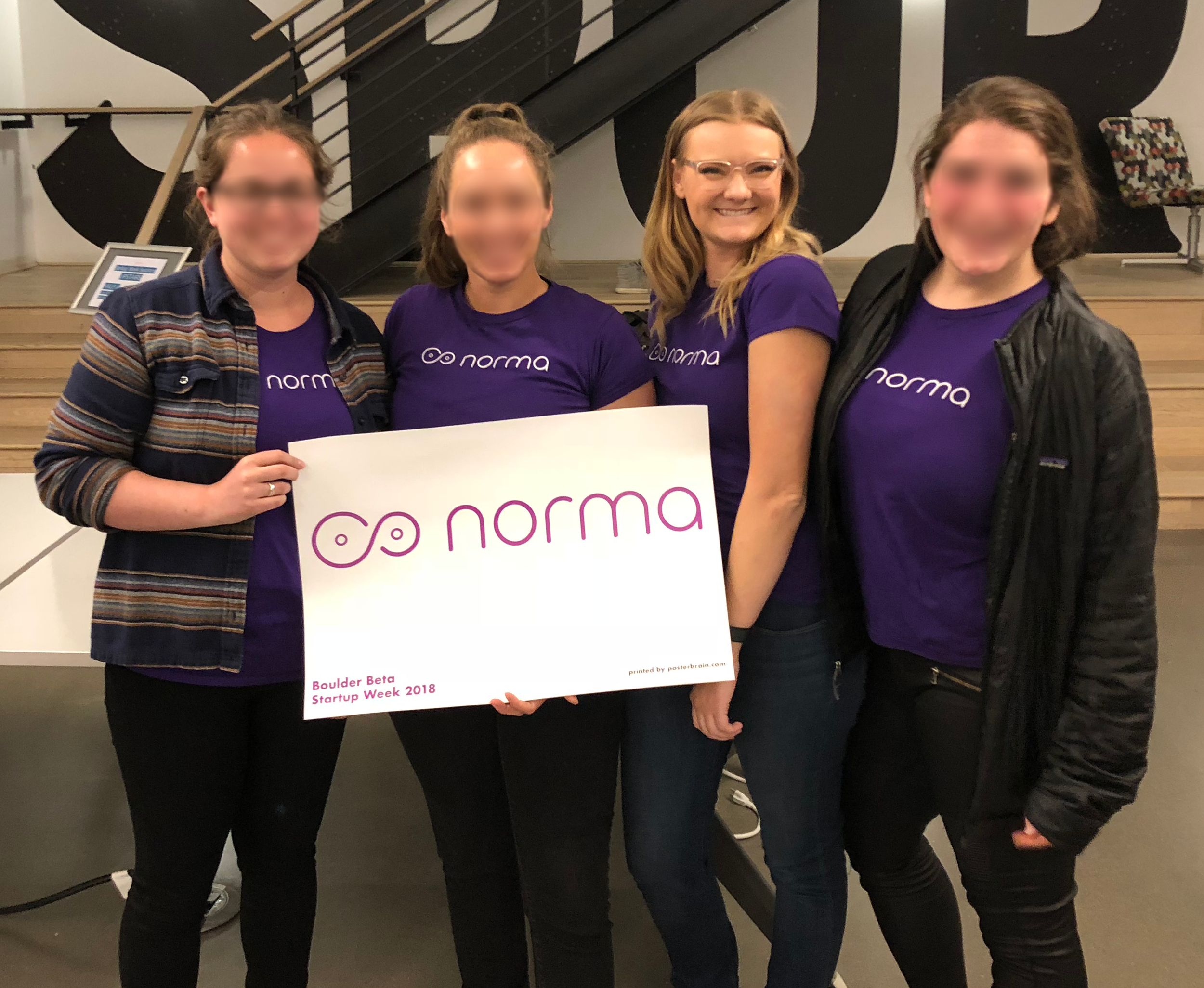
Norma was born at Techstars Women’s Startup Weekend Denver in early 2018, where five women who had never met came together around a shared mission- to empower women to take control of their breast health. Over an intense 54-hour weekend, we researched breast health trends, identified market gaps, tested early product ideas, and developed a concept for an all-inclusive breast health app paired with a connected reminder device. Our collaboration quickly proved powerful: Norma won first place at the Denver Startup Weekend, earning a trip to Paris to compete in the Global Startup Weekend Women pitch event, where we placed third internationally.
Soon after, we participated in the University of Colorado’s New Venture Challenge, taking home three awards, including the Women’s Entrepreneurship Prize and Audience Choice Award. What began as a spontaneous weekend collaboration between strangers grew into a passionate, all-women team united by personal connections to breast cancer and a shared drive to help women everywhere understand their “normal,” so they can quickly identify when something changes.
UNDERSTANDING THE PROBLEM
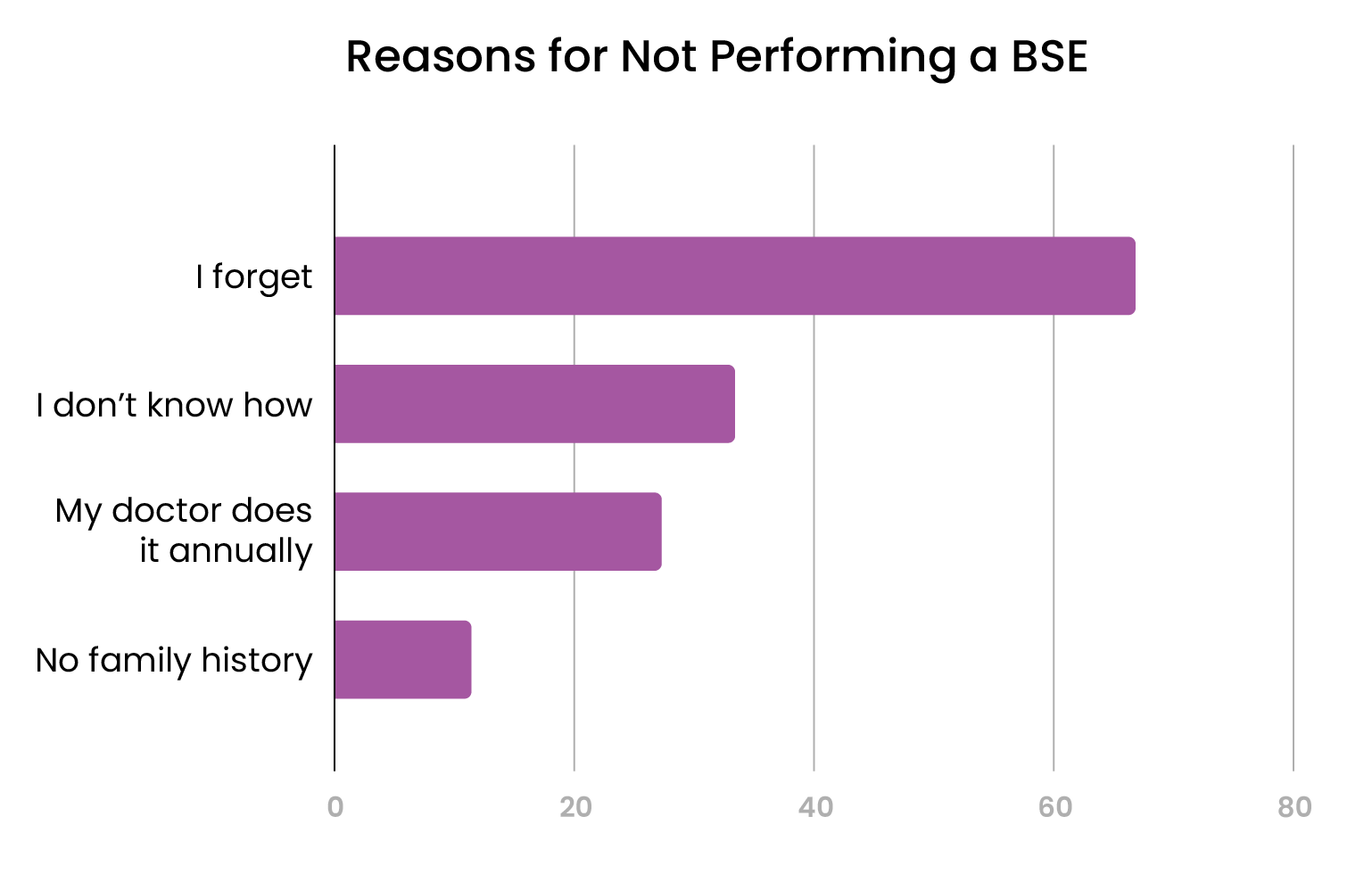
Many women want to take charge of their health, yet few regularly perform breast self-exams, one of the simplest and most effective ways to detect early signs of breast cancer. 1 in 8 women in the United States will develop breast cancer in her lifetime. Every year, 300,000 women develop breast cancer, and in 2018 alone, 40,000 women died. While there is no cure, early detection is key to treatment and increases a woman's chance of surviving by 98%. Of the 436 women we surveyed, 78% did not perform monthly exams, but 90% said they would if they had a reminder and knew how.
GOALS
Many women want to take charge of their health, yet few regularly perform breast self-exams, one of the simplest and most effective ways to detect early signs of breast cancer. 1 in 8 women in the United States will develop breast cancer in her lifetime. Every year, 300,000 women develop breast cancer, and in 2018 alone, 40,000 women died. While there is no cure, early detection is key to treatment and increases a woman's chance of surviving by 98%. Of the 436 women we surveyed, 78% do not perform monthly exams, but 90% said they would if they had a reminder and knew how.
RESEARCH AND DISCOVERY
METHODS
To better understand women’s attitudes and needs around breast health and self-exams, we began with a combination of competitive analysis, user interviews, and surveys. Our goal was to uncover both market gaps and behavioral insights that could inform a meaningful solution. We analyzed existing FemTech products to identify opportunities, interviewed women to understand their motivations and barriers, and distributed a survey to gather quantitative data on habits and awareness. Together, these methods gave us a clear picture of where existing tools fall short and how we could design an experience that truly supports women’s breast health.
KEY FINDINGS
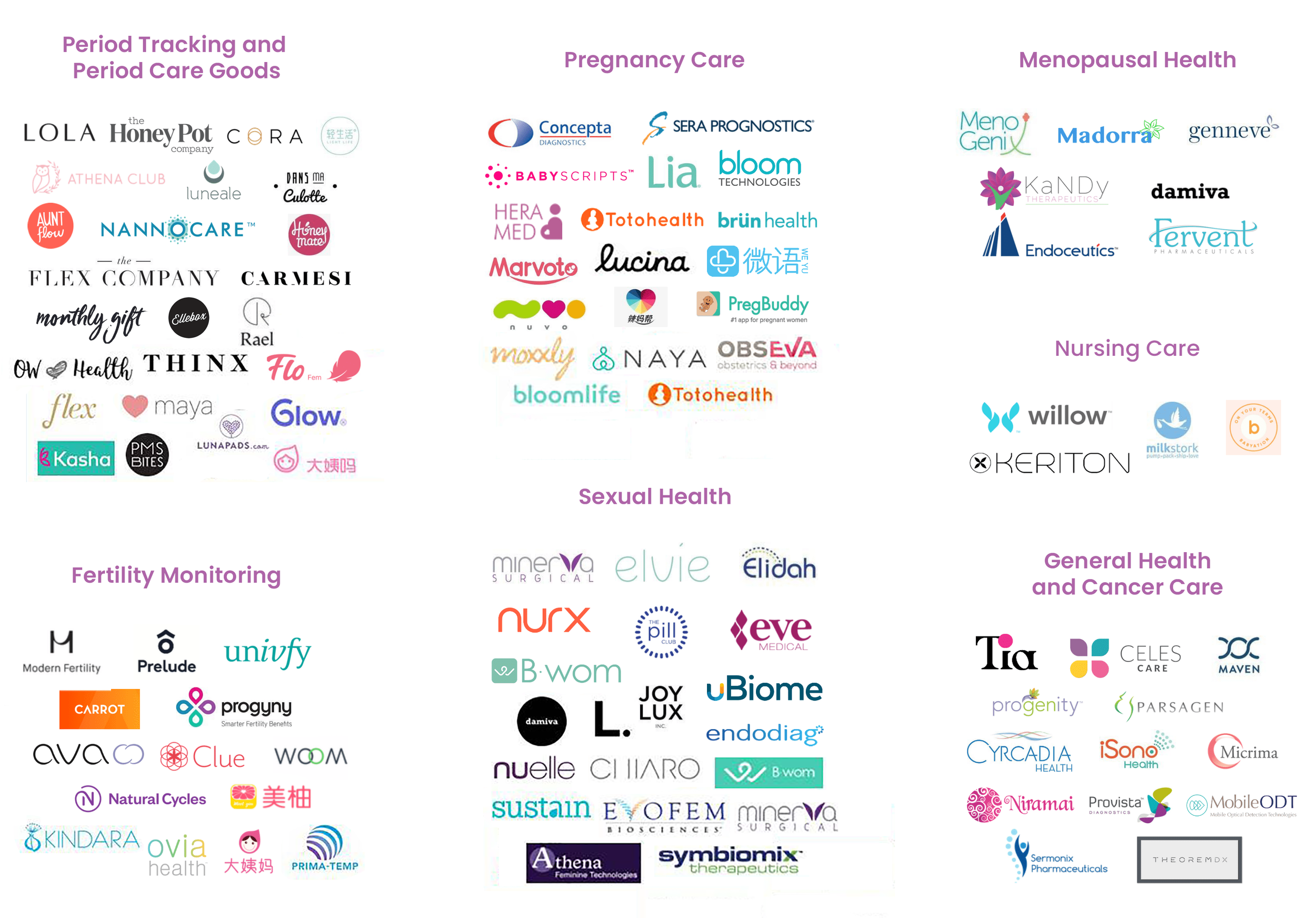
The rapidly growing FemTech market is projected to reach $60 billion by 2025, and could grow to $177.55 billion by 2033. While many companies are creating innovative products and services designed specifically for women, we discovered a significant gap in the area of breast health.
Existing apps and devices primarily focus on fertility, menstruation, and pregnancy tracking, yet few address ongoing breast wellness or early detection. We found that a tool to help women track changes in their breasts over time, similar to how period trackers monitor cycles, simply didn’t exist. This gap in such a large market validated our solution to empower women with proactive, personalized breast health.
Onboarding: Many developers struggled to understand how to get started due to unclear entry points and high-friction registration flows. Given the complexity of telecom infrastructure and API authentication standards, a seamless onboarding experience will be critical. We need to minimize upfront barriers like multi-step registration and unclear token management, and instead focus on simple onboarding that offers immediate value. By clearly communicating what Bryte IQ does, who it’s for, and what the first step is, we can help new users build early momentum and confidence.
Documentation: Developers want clear, concise, and contextual documentation with working code samples they can use immediately. Because Bryte IQ’s APIs expose powerful and complex network capabilities, documentation will need to go beyond reference material. We will need to include real-world use cases, quick-start guides, and inline explanations to meet developers where they are, to reduce ambiguity, and encourage hands-on experimentation without requiring external support.
Testing: Developers consistently asked for sandbox or test environments to safely experiment without production consequences. To lower the risk of user error and increase trust in how APIs behave, we will need a dedicated test environment to allow developers to confidently try endpoints, learn the system, and verify behaviors before pushing anything live.
Trust & Transparency: Users were wary of “black box” systems and wanted clear insights into how their apps interact with underlying infrastructure. Telecom APIs significantly impact real-world performance and user privacy, so we will need to prioritize trust-building UX and transparency regarding API behaviors, limitations, and latency. These steps can reassure developers and position Bryte IQ as a reliable integration partner.
Navigation: Developers needed dashboards that helped them navigate their applications, manage their team, quickly locate errors, test changes, and prepare apps for deployment. To support this, we will need to create a centralized, permission-based navigation system that streamlines access to tools, documentation, and API metrics. By aligning the dashboard layout with real developer workflows, we can increase efficiency and reduce frustration in day-to-day tasks.
CORE USERS
We developed our personas based on qualitative data gathered from the 6 developer interviews and 2 stakeholder workshops, supported by insights from a comprehensive competitive analysis. These personas helped align design and engineering teams around the needs of both enterprise developers and non-technical decision makers. We shared the initial personas with internal tech leads and refined them based on feedback to ensure they reflected actual developer workflows.
These personas represent key roles involved in evaluating and using the platform during MVP. We planned to revisit and expand them post-launch.


THE SOLUTION JOURNEY
Our solution evolved across three interconnected tracks, each designed to validate the concept, build early momentum, and shape the foundation of a future product and monetization. Because breast health is both deeply personal and habit-driven, we knew we needed more than just an app; we needed a supportive, educational experience that would help women feel confident, informed, and motivated over time. By approaching the solution in three parts, we were able to learn quickly, design intentionally, and test assumptions realistically.
TRACK 1: THE COMMUNITY
Track 1 focused on building a community of early adopters, giving us direct access to real women’s experiences, questions, and challenges. This community became a constant feedback loop that guided our decisions and ensured we were solving the right problems.
TRACK 2: THE APP
Track 2 centered on designing and developing the Norma app, a practical and accessible tool that brings everything women need into one consolidated place. The app was envisioned as a monthly exam experience paired with a personal health journal, educational resources, and a supportive community, all within a single, intuitive interface.
TRACK 3: THE BUTTON
Track 3 explored the concept of a connected IoT reminder device, envisioned as a simple, tactile app-connected button to help women build consistent self-exam habits.
TRACK 1: THE COMMUNITY
STRATEGIC REASONING
Because breast health is a personal and often stigmatized topic, we made a strategic decision to start by building a community of early adopters. Instead of jumping straight into features or product assumptions, our goal was to understand the emotional, educational, and behavioral landscape surrounding breast health. Creating this foundation early allowed us to reduce risk, validate the problem space, and ensure that any solution we designed would be grounded in real needs rather than assumptions.
EARLY ADOPTERS
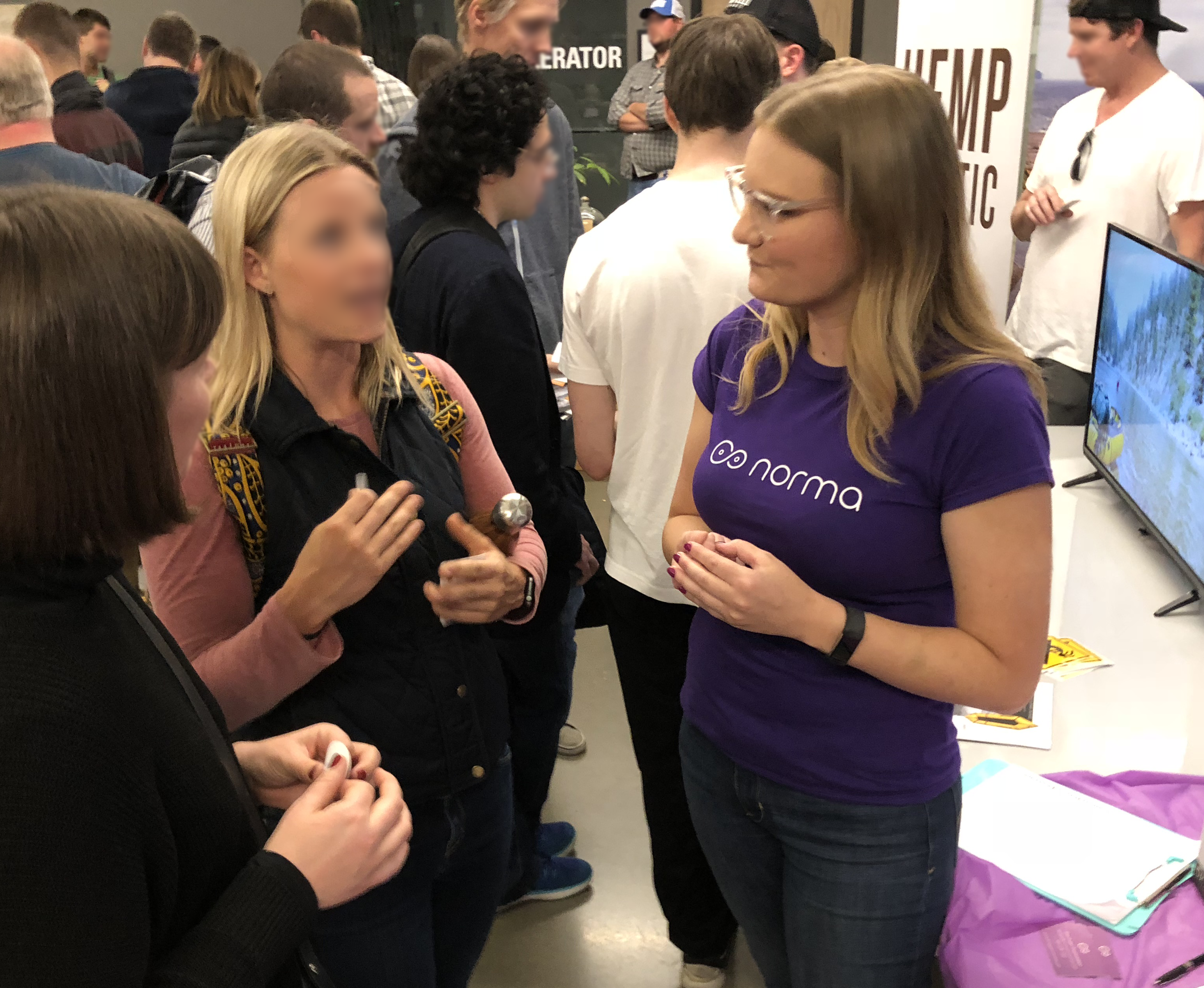
To build this early adopter community, we took a highly resourceful and proactive approach, meeting women where they already were. We attended local breast cancer awareness events and survivorship gatherings, where conversations were already centered around breast health and advocacy. We participated in pitch competitions and entrepreneurial meetups to tap into networks of women eager to support early-stage innovation. We also leveraged social media groups, women’s health forums, and personal introductions to reach individuals who were passionate about preventative care, breast cancer survivors, or simply curious about improving their health and habits. This multi-channel approach enabled us to quickly gather a diverse group of early adopters and ensured that our participants were genuinely invested, vocal, and willing to engage deeply throughout the research and concept validation process.
Caption
Caption

Breast Cancer Awareness Day at the Rockies Stadium
Results:
build this early adopter community, we took a highly resourceful and proactive approach, meeting women where they already were. We attended local breast cancer awareness events and survivorship gatherings, where conversations were already centered around breast health and advocacy.
We participated in pitch competitions and entrepreneurial meetups to tap into networks of women eager to support early-stage innovation. We also leveraged social media groups, women’s health forums, and personal introductions to reach individuals who were passionate about preventative care, breast cancer survivors, or simply curious about improving their health and habits.
This multi-channel approach enabled us to quickly gather a diverse group of early adopters and ensured that our participants were genuinely invested, vocal, and willing to engage deeply throughout the research and concept validation process.
PITCH COMPETITIONS, GRANTS, AND MEDIA ATTENTION
To build this early adopter community, we took a highly resourceful and proactive approach, meeting women where they already were. We attended local breast cancer awareness events and survivorship gatherings, where conversations were already centered around breast health and advocacy. We participated in pitch competitions and entrepreneurial meetups to tap into networks of women eager to support early-stage innovation. We also leveraged social media groups, women’s health forums, and personal introductions to reach individuals who were passionate about preventative care, breast cancer survivors, or simply curious about improving their health and habits. This multi-channel approach enabled us to quickly gather a diverse group of early adopters and ensured that our participants were genuinely invested, vocal, and willing to engage deeply throughout the research and concept validation process.
SOCIAL MEDIA
In addition to the standardized design system, I developed a custom illustration style and icon set to reinforce Bryte IQ’s brand identity and make complex concepts more approachable. These visuals played a crucial role in differentiating the platform, enhancing visual storytelling, and enabling non-technical stakeholders to grasp the technical value propositions quickly. From scalable iconography to contextual spot illustrations, each asset was designed to align with our design principles of clarity, trust, and simplicity. This cohesive visual language not only elevated the user experience but also improved content comprehension and added polish across the marketing site.
TRACK 2: THE APP
LAUNCH
Bryte IQ was officially launched at the SCTE TechExpo in Atlanta in September 2024 by Charter EVP of Product, Danny Bowman. He described Bryte IQ as “a significant leap forward, simplifying the process for developers, fostering a vibrant ecosystem of innovative services.”

RESULTS
Website traffic climbed from (xx) visits in the first week to over (xxxx), a 700% increase that reflected heightened interest and engagement following our announcement.
Similarly, the number of account registration requests surged by 675% following the launch at SCTE TechExpo, signaling strong interest among developers.
Onboard, an early partner, integrated Bryte IQ to streamline bulk internet services in multifamily housing, demonstrating the platform’s potential to drive operational efficiencies and enhanced customer experiences.
Secured additional strategic partnerships to expand platform adoption (details under NDA).
PHASE 2
DEVELOPER PORTAL
The authenticated portion of the Bryte IQ platform was designed to support developers as they onboard and create applications by selecting APIs. After logging in, users land on a personalized dashboard that provides important information and useful links at a glance. From there, the user flow guides them through the application registration process, organized within a modular, scalable interface (User Flow shown in diagram below)
This experience aligns with our design goals of Enabling Seamless Navigation and Accelerating Exploration & Adoption by emphasizing clarity, contextual guidance, and reducing cognitive load through phased visibility. This phase of the project involved close collaboration with internal stakeholders and developers to ensure the platform’s UX aligned with real-world technical workflows while supporting system requirements and implementation limitations.

TESTING AND ITERATION
INCORPORATE FEEDBACK
With limited access to external users during the development of the Phase 2 authenticated dashboard, we conducted focused usability sessions with a small group of early committed partners and internal subject matter experts. These sessions included website walkthroughs and scenario-based tasks to validate core workflows, identify friction points, and uncover gaps in the user experience.
FEEDBACK
API documentation felt buried and hard to find from the main navigation.
ACTION
Introduced a persistent link in the left nav with subcategories leading directly to the API in question. Overcame technical constraints to prevent the documentation from opening in a separate tab.
OUTCOME
Increased documentation access during setup sessions by 55%.
Users were unclear on how to start integrating APIs after login.
Added a prominent “Getting Started” module on the main dashboard with direct links to key setup tasks.
Reduced time-to-first-action from an average of 3 minutes to under 1 minute in internal tests. Improved developer confidence, efficiency, and mood.
Developer Docs felt disjointed and difficult to follow.
Conducted a full audit of the developer documentation to remove outdated content, improve overall structure, and add supporting diagrams.
Decreased set-up time and lowered support requests related to setup and configuration.
FUTURE GOALS
WHATS NEXT?
Our team has a clear roadmap to evolve the platform in ways that deliver greater value to users and align with business objectives. In the near term, we’ll roll out Dark Mode as an accessibility-driven quick win and introduce status monitoring to give users real-time visibility into integration health.
Building on feedback uncovered during user research, we will also implement flexible user management and team-based collaboration, enabling organizations to structure role and permission-based workflows that support seamless collaboration across teams.
Looking back at our design goal to Accelerate Exploration & Adoption, advancing automation will play a central role in our strategy. To empower self-service and reduce friction, we’ll launch a Help Center with an integrated Knowledge Base and provide a streamlined process for support ticket submission.
From a business standpoint, upcoming releases will introduce a monetization strategy with transparent billing and a usage dashboard, giving organizations greater insight and control over API consumption. Together, these enhancements are designed to strengthen user trust, drive adoption, and ensure the platform scales effectively to meet enterprise-level demands.
